Dust is one of the most common challenges faced by manufacturing units, processing plants, fabrication workshops, and engineering facilities. Fine airborne particles not only affect product quality but also create health hazards, increase equipment wear, and make regulatory compliance more difficult. A Cartridge Dust Collector is designed to address these issues efficiently by capturing fine dust before it spreads throughout the workplace.
Industries across Coimbatore, one of Tamil Nadu's leading manufacturing hubs, are increasingly investing in advanced dust collection systems to maintain cleaner production environments and improve operational efficiency.
What Is a Cartridge Dust Collector?
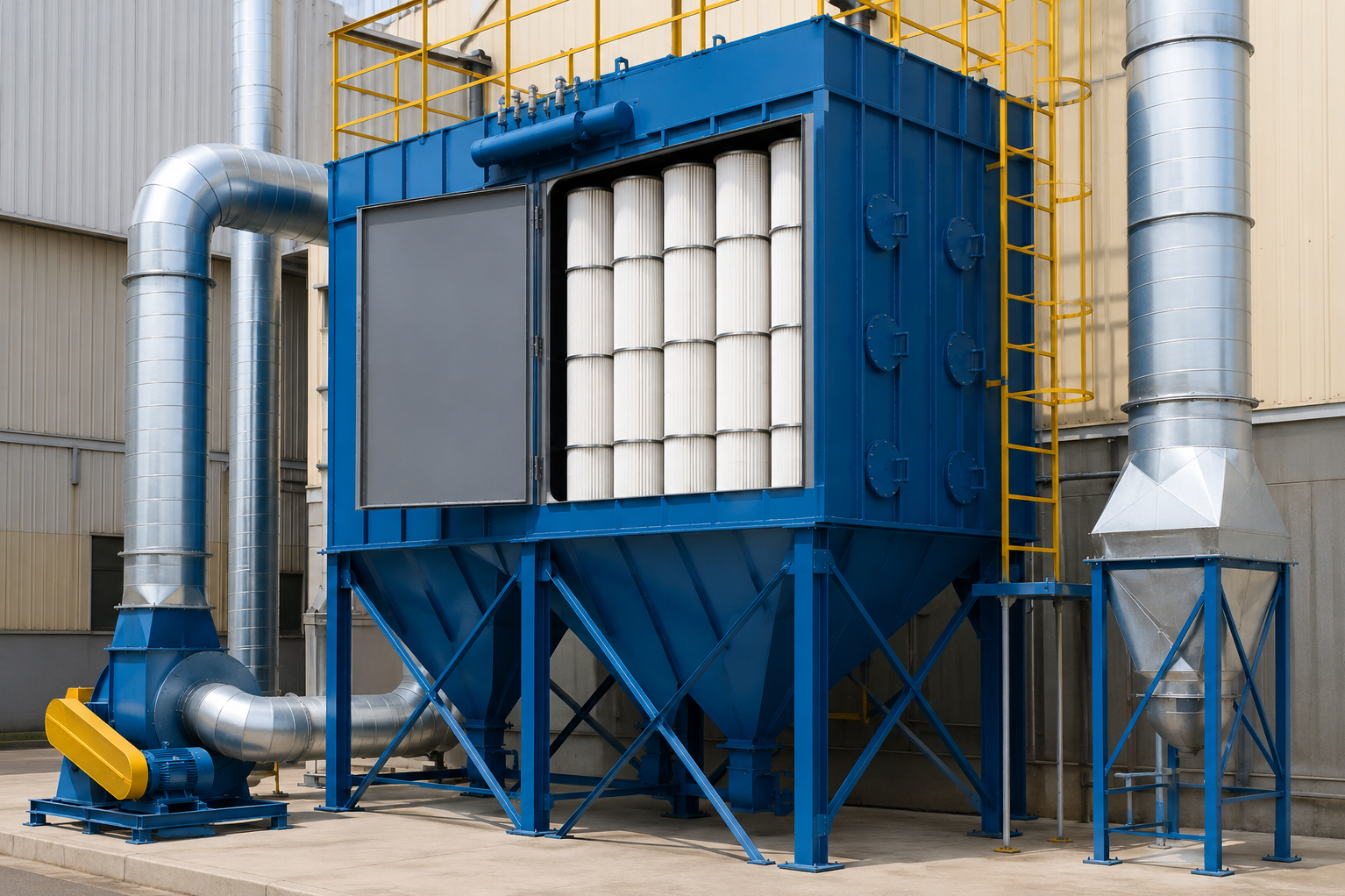
A Cartridge Dust Collector is an air filtration system that removes suspended dust particles using specially designed filter cartridges. Unlike traditional bag filters, cartridge filters provide a larger filtration area within a compact design, making them suitable for facilities where space is limited.
The system draws contaminated air into the collector, where dust particles are trapped on the filter media while clean air is discharged back into the workspace or exhausted safely.
Industries That Commonly Use Cartridge Dust Collectors
Cartridge dust collectors are widely used in industries such as:
- Metal fabrication
- CNC machining
- Laser cutting
- Pharmaceutical manufacturing
- Powder coating plants
- Chemical processing
- Food processing
- Plastic manufacturing
- Engineering workshops
- Packaging industries
These sectors generate fine particulate matter that requires efficient filtration to maintain productivity and worker safety.
Key Benefits of Using a Cartridge Dust Collector
Excellent Filtration Efficiency
Modern cartridge filters capture very fine dust particles that may otherwise remain suspended in the air. This contributes to a healthier work environment and cleaner production areas.
Compact Installation
Compared to conventional baghouse systems, cartridge collectors require less floor space, making them suitable for factories with limited installation areas.
Lower Maintenance Requirements
Most systems include automatic pulse cleaning mechanisms that remove accumulated dust from the filters, reducing manual cleaning frequency and extending filter life.
Improved Equipment Performance
Dust accumulation can damage machinery, clog ventilation systems, and reduce production efficiency. Effective dust collection helps maintain consistent equipment performance.
Better Workplace Visibility
Cleaner air improves visibility around machinery, reducing operational risks and creating a more comfortable workplace.
How the Filtration Process Works
A typical cartridge dust collection system follows these steps:
- Dust-laden air enters the collector.
- Larger particles settle within the collection chamber.
- Fine particles are captured on cartridge filters.
- Pulse jet cleaning removes accumulated dust.
- Collected dust falls into a hopper or collection bin.
- Clean air exits the system.
This continuous cycle allows uninterrupted operation during production.
Factors to Consider Before Selecting a Cartridge Dust Collector
Choosing the right system depends on several operational factors:
- Type of dust generated
- Dust particle size
- Airflow requirements
- Production volume
- Installation space
- Temperature of the process
- Moisture content in the air
- Future production expansion
Selecting a system solely based on equipment size can lead to underperformance or unnecessary operating costs.
Importance for Manufacturing Units in Coimbatore
Industrial areas in Coimbatore accommodate diverse sectors ranging from textiles and foundries to precision engineering and automotive components. Facilities operating multiple production lines often generate varying levels of dust throughout the day.
An appropriately designed cartridge dust collection system helps maintain cleaner workspaces while supporting smoother production processes and regulatory compliance.
Maintenance Best Practices
Regular maintenance helps preserve filtration efficiency.
Recommended practices include:
- Inspect filter cartridges periodically.
- Monitor pressure drop across filters.
- Empty dust collection bins before overflow.
- Check pulse cleaning valves.
- Inspect seals for air leakage.
- Replace damaged filters promptly.
- Follow manufacturer-recommended service intervals.
Preventive maintenance minimizes downtime and extends equipment life.
Common Mistakes to Avoid
Many businesses experience poor dust collection performance because of avoidable issues, including:
- Installing an undersized system
- Ignoring airflow calculations
- Delaying filter replacement
- Poor duct layout
- Incorrect fan selection
- Skipping routine inspections
Addressing these factors during planning significantly improves long-term performance.
Why System Design Matters
The effectiveness of a cartridge dust collector depends on more than the filter itself. Proper duct sizing, airflow balancing, fan capacity, and collection point placement all contribute to efficient dust removal.
Companies such as Fine Fab India design dust collection solutions after evaluating process requirements, factory layout, and dust characteristics, helping industries achieve reliable and consistent performance.
As manufacturing activities continue to expand across Coimbatore and Tamil Nadu, investing in an efficient cartridge dust collector is becoming an essential part of maintaining safe, productive, and environmentally responsible industrial operations.